
IM Certified® Blog
IM 6–12 Math: Grading and Homework Policies and Practices
By Jennifer Willson, Director, 6–12 Professional Learning Design In my role at IM, working with teachers and administrators, I am asked to help with the challenges of implementing an IM curriculum. One of the most common challenges is: how can we best align these...
By the End of Grade 3: Developing Fluency with Multiplication
By Zack Hill The major work of grade 3 includes representing and solving problems that involve multiplication and division. Then, by the end of grade 3, students are expected to know from memory all products of two one-digit numbers. What does this look like and how...

Growing with the IM Community Hub
By Portia Gibbs Roseboro, Britnee Wright, Justin Brennan The IM Community Hub, affectionately known as “The Hub,” was created to support educators using the IM Curriculum in navigating what teaching looks like now. Educators register for free to access resources from...
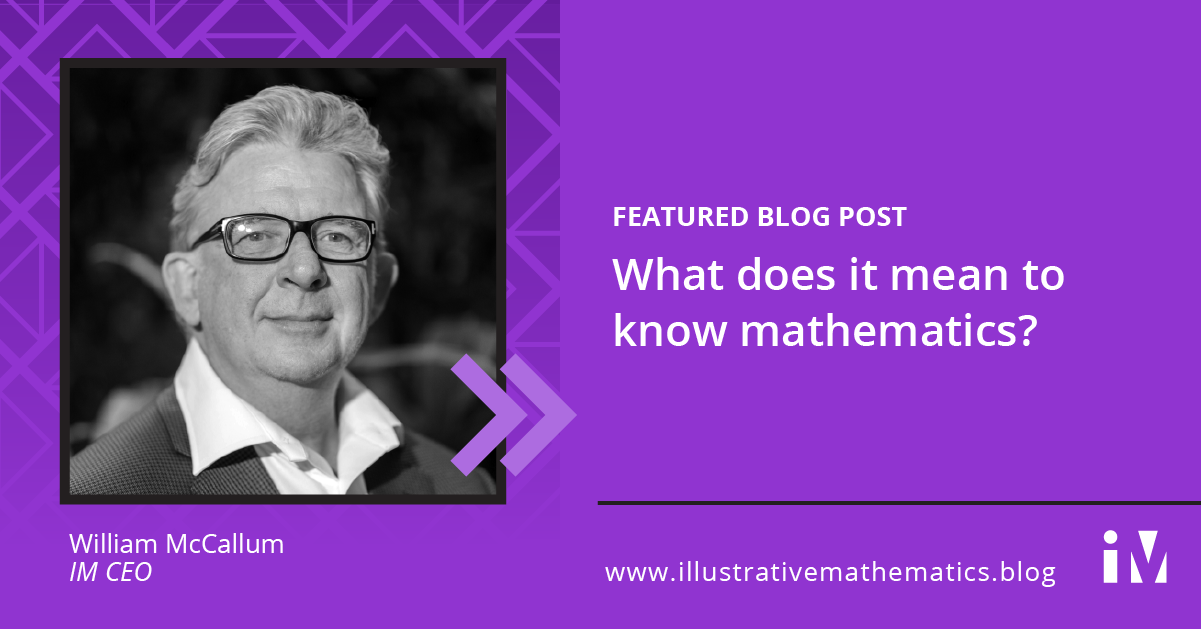
What does it mean to know mathematics?
By William McCallum A world where all learners know, use, and enjoy mathematics. Perhaps the most mysterious verb in the IM vision—a world where all learners know, use, and enjoy mathematics—is the first one: know. Knowing mathematics means being able to "do the...
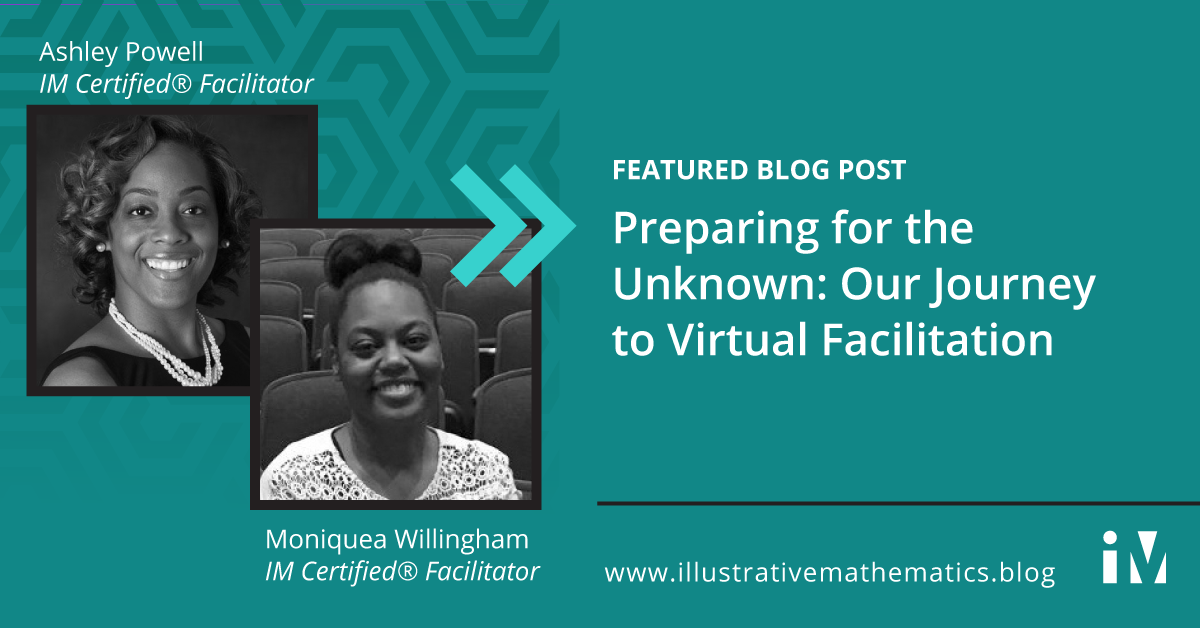
Preparing for the Unknown: Our Journey to Virtual Facilitation
The excitement and nervousness in the room was almost palpable! There were approximately forty facilitators present for the 3-day IM K–5 Curriculum training in Dallas, Texas. We completely immersed ourselves into the curriculum and its components, practiced in-person facilitation moves, and made meaningful connections with one another and our incredible support team. It was an awesome experience!
The Nuances of Understanding a Fraction as a Number
By Kristin Gray This was originally posted on Kristin Gray’s personal blog, Math Minds, on November 15, 2020. Student work is just the best. It is the one thing that will always motivate me to write! So, let’s kick this post off with a great work example from grade 3....
Creating Time and Space for Students to Develop Foundational Mathematical Ideas
By Maureen D. O'Connell “Slow down, you’re moving too fast, you got to make the morning last...” When we consider early childhood mathematics this familiar song comes to mind. In our hurried society where more is more, childhood expectations have been pushed to...
Reading Graphs is a Complex Skill
by William McCallum Newspapers are full of graphs, far more than 10 or 20 years ago. Indeed, I have a graph to show that! (Source, Priceonomics) And yet I wonder how often readers see graphs as pictures illustrating a point, rather than as texts to be read. A reader...
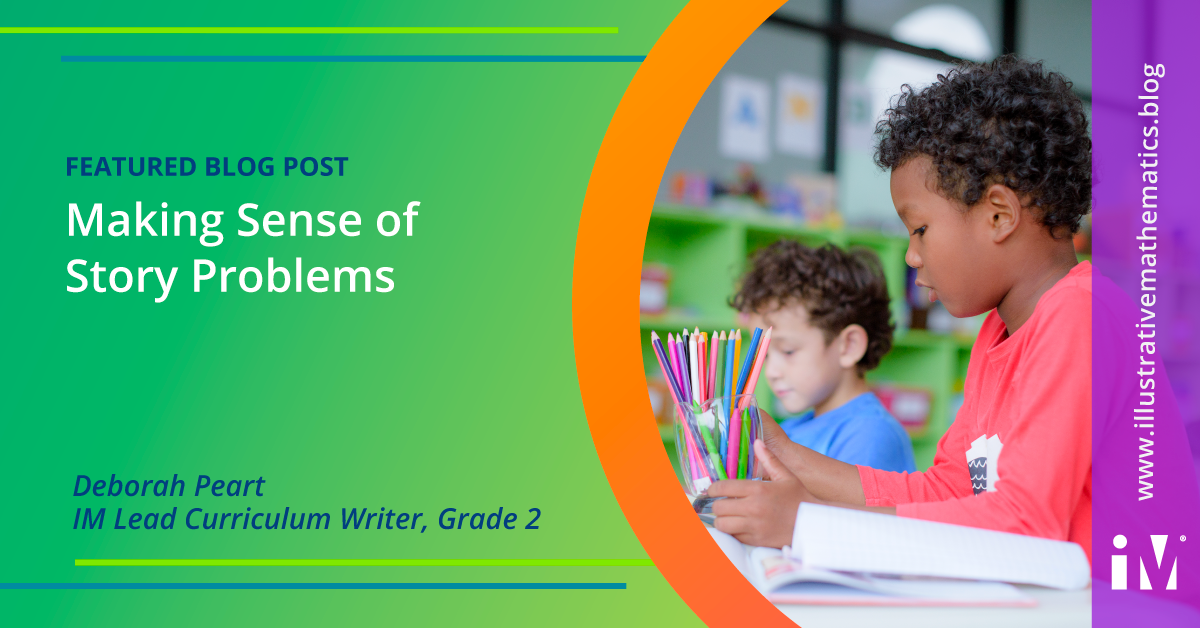
Making Sense of Story Problems
by Deborah Peart, Grade 2 Lead Many people have an aversion to word problems. They cringe at the mention of them. In elementary classrooms, teachers often report that this is what their students struggle with most. When word problems show up in math class, even...
The Story of Grade 5
by Sarah Caban From the start of the year, we want students to know they are capable of engaging in grade-level mathematics. In the Opportunity Myth (2018), data shows that there is an opportunity gap for historically marginalized students—often students of...