
IM Certified® Blog
In the Beginning: Unit 1 in Kindergarten
By Alex Clayton When was the last time you stepped into an entirely new environment? You weren’t sure exactly what was going to happen. There was no one you recognized. How did you feel: Uncertain? Anxious? Hopeful? During morning circle on the first day of...
Illustrative Mathematics Celebrates 10 Years: Letter from the CEO
2021 marks our 10th anniversary at Illustrative Mathematics, and we couldn’t be more proud to have impacted so many hundreds of thousands of students, teachers, and families since our humble beginnings in 2011. Our business has changed dramatically over the past...
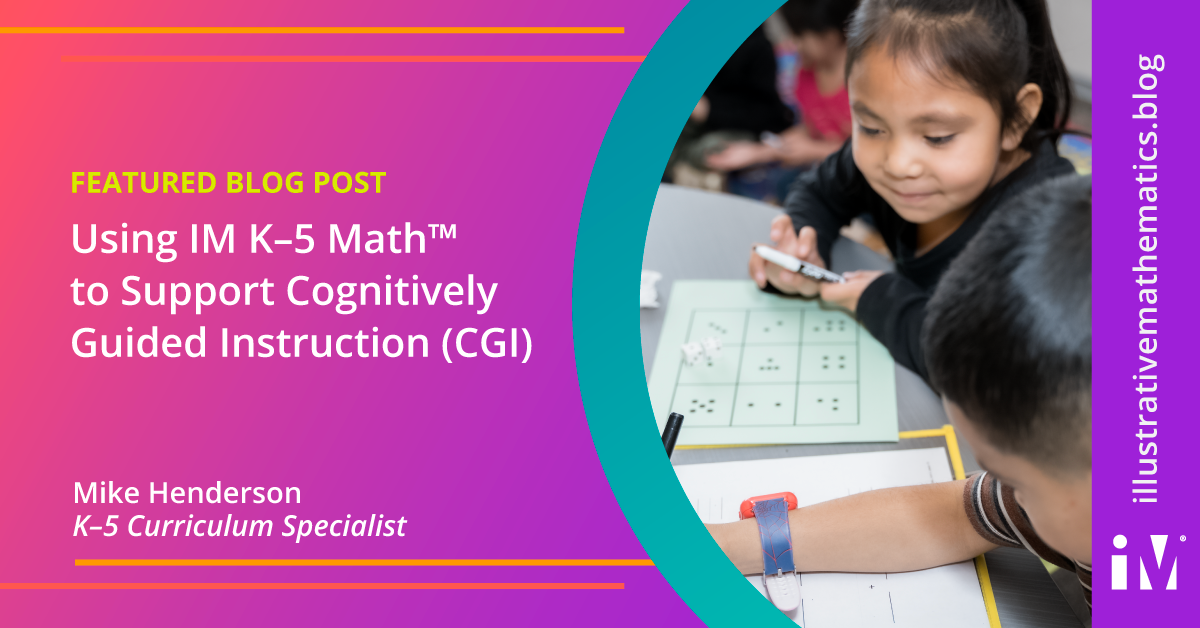
Using IM K–5 Math™ to Support Cognitively Guided Instruction (CGI)
By Mike Henderson “The activities require skills that students are not taught prior to doing the activity. They’re expected to just jump right in. Why isn’t there more modeling or re-teaching of basic skills so students can be successful with the lesson?” As teachers...
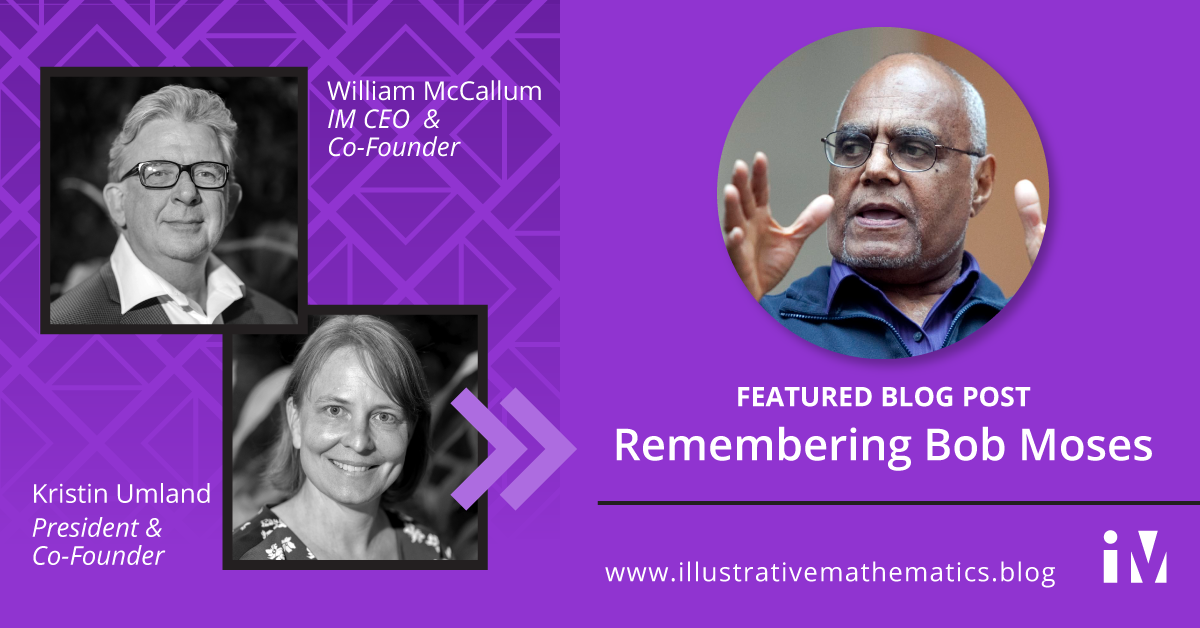
Remembering Bob Moses
By William McCallum and Kristin Umland "Math literacy will be a liberation tool for people trying to get out of poverty and the best hope for people trying not to get left behind.” —Bob Moses, 1935–2021 Bob Moses, the civil rights leader and mathematics educator who...

Together Apart: Amplifying the “Gift of Student Thinking” in Distance Learning with IM
By Maureen D. O’Connell, IM K–5 Math™ Pilot Teacher,IM Certified® Facilitator for IM K–5 Math “The more intensely interested a teacher is in a student’s thinking, the more interested the student becomes in his or her own thinking.” —Eleanor Duckworth Whether we teach...

Gifts: A Reflection on Student Thinking
By Elham Kazemi, Co-Author of Intentional Talk and Professor at University of Washington “Gifts from the earth or from each other establish a particular relationship, an obligation of sorts to give, to receive, and to reciprocate.” Robin Wall Kimmerer, Braiding...

Unlocking Learners’ Thinking Using the Mathematical Language Routines
By IM Certified Facilitators, Cheryl Fricchione and Rachel Rundstrom Consider this:A child whose primary language isn’t English does not participate in the classroom to the degree that their English-speaking peers do. Parent-teacher conferences are held with family...
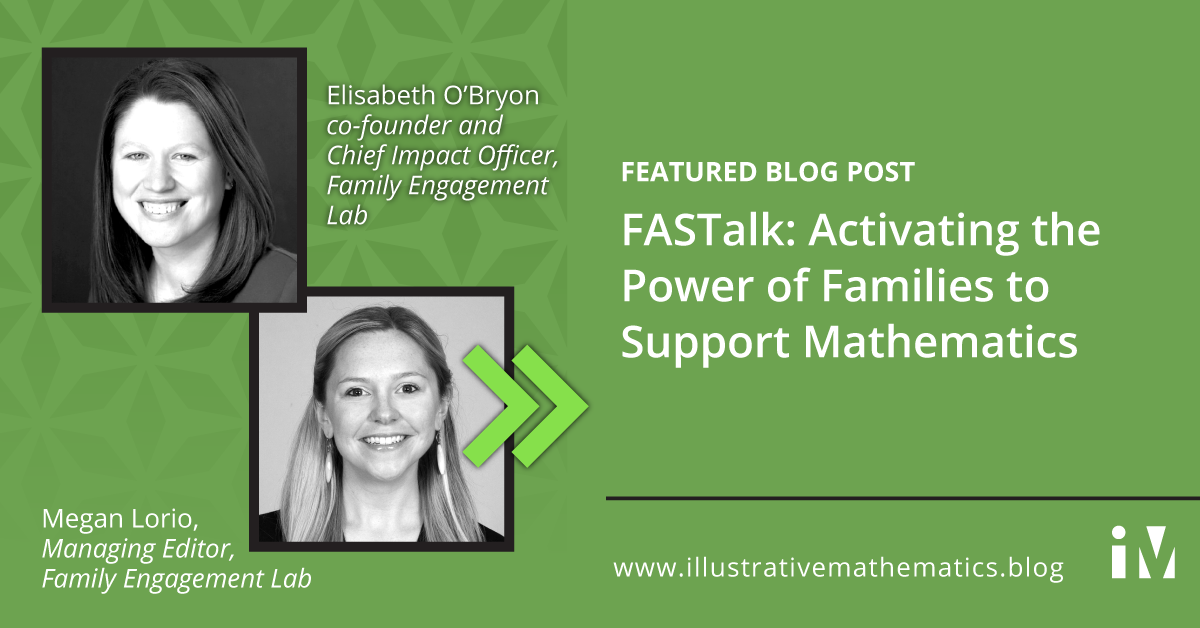
FASTalk: Activating the Power of Families to Support Mathematics
By Elisabeth O’Bryon, co-founder and Chief Impact Officer at Family Engagement Lab and Megan Lorio, Managing Editor at Family Engagement Lab Engaging families in meaningful and equitable ways is a cornerstone of student success in the classroom. Decades of research...
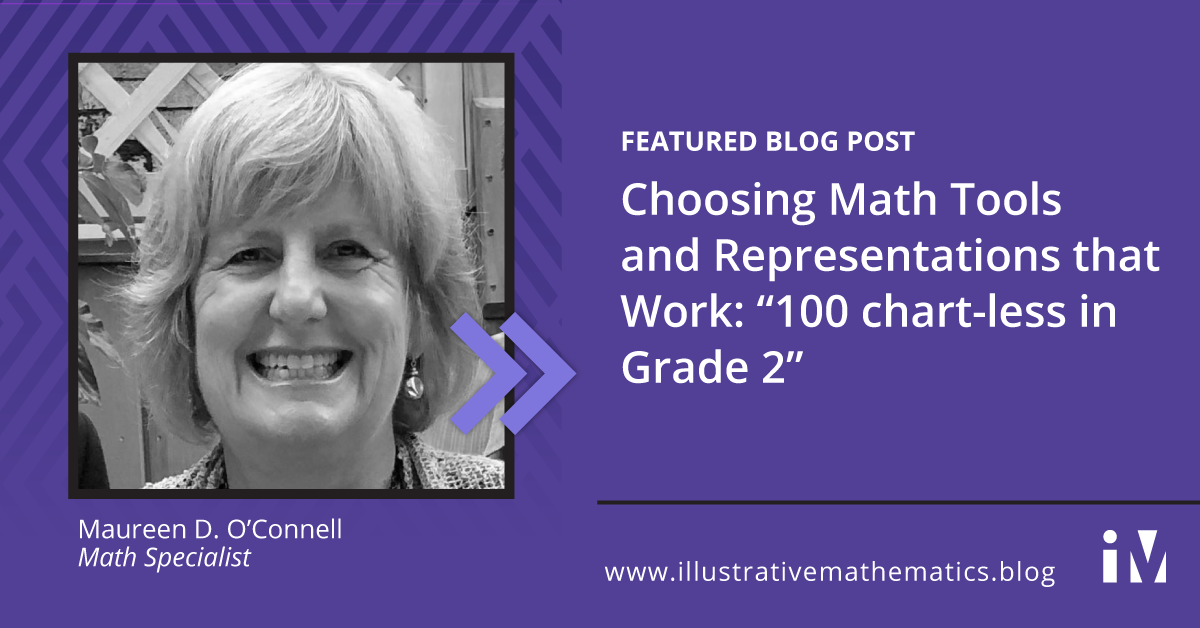
Choosing Math Tools and Representations that Work:
“100 chart-less in Grade 2”
By Maureen D. O’Connell, Math Specialist Some math tools and representations help students solve in-the-moment problems. Other math tools and representations help students solve problems and grow their conceptual understanding. Which type of representations are you...

Multi-grade Classrooms and
IM K–5 Math™
By Jen Hawkins, IM Facilitator and IM K-5 Product Specialist Illustrative Mathematics believes that students can achieve success as mathematical thinkers by working through problems and consolidating their learning through classroom discussions and anchoring...