

By Meredith Dadigan Abel, IM Certified® Facilitator, K-5
Teachers are the heartbeat of any new math curriculum—they bring lessons to life, adapt to student needs, and make learning happen every day. But behind the scenes, administrators are the backbone, ensuring the entire system stays strong and supported. Their role is critical, and their impact is often greater than it appears.
With a mile long to-do list and multiple hats to wear, it can be difficult to prioritize your role as the instructional leader during a curriculum rollout. Here are 4 practical tips you won’t find in a textbook or educational journal that can make a huge difference in your practice.
1. Wear Your Teacher Hat
Whether you moved into administration quickly because of your top-notch leadership skills or you spent decades in the classroom, at your core, you are a teacher. It’s easy to get caught up in budgets, schedules, and meetings and forget where you came from. But remember: Teachers look up to you not for your administrative skills, but for your instructional leadership.
Ask some of your teachers if you can teach a lesson in their classroom to experience firsthand the joy and challenges of teaching a new math curriculum. This shows vulnerability, builds credibility, and gives you real insight when teachers hit roadblocks and need you to problem solve with them. Some of my favorite moments as an administrator were co-teaching in classrooms alongside my teachers. Vulnerability paired with credibility is a powerful formula for earning and maintaining respect from your teachers.

2. Get Mobile
As a dean of instruction leading the rollout of a new math curriculum, I knew it was essential to stay connected to what was happening in classrooms. But being an administrator who wore many hats meant my time was often pulled in many directions.
Investing in a rolling desk allowed me to stay present in classrooms, offer on-the-spot coaching and support, and manage other administrative tasks without missing a beat. It also helped me immerse myself in math instruction and experience the curriculum in action. While I’m not sure exactly what my former colleagues remember most about me, I know they remember the sound of my rolling desk coming down the hallway!
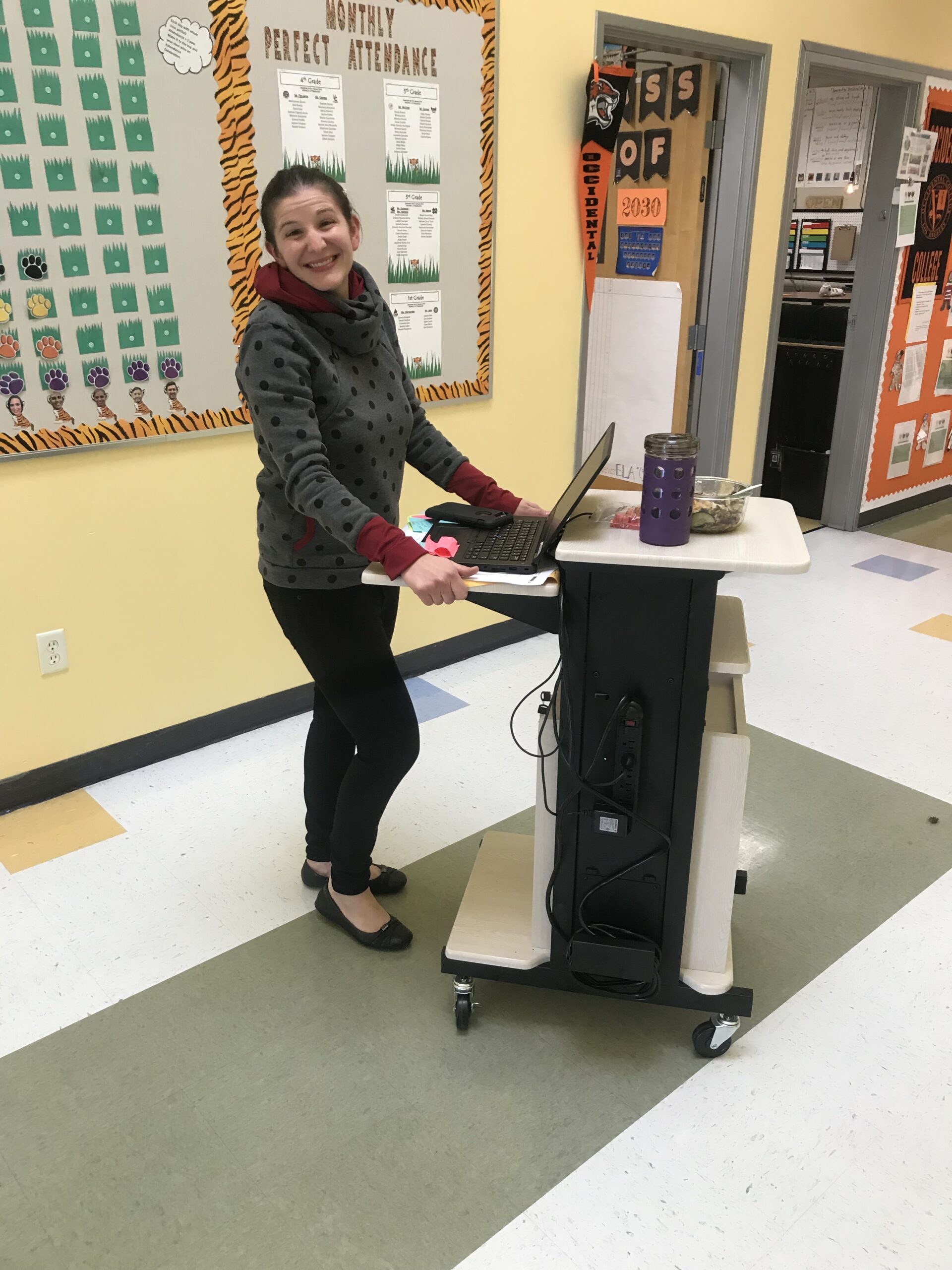
There are many ways to get mobile and stay present in classrooms. You don’t need a rolling desk to make this work—a lap tray, a backpack, or any portable setup can help you stay present. Even short blocks of time in classrooms can have a powerful impact on both teaching and learning.
3. Take a Break from the Numbers
This may seem counterintuitive since standardized test pressure is real and can have real consequences for your school, however, I challenge you to stop fixating on test scores for the beginning of this journey. Standardized test scores don’t tell the full story and never will. Focus instead on implementing the curriculum with integrity and using high-impact instructional practices.
Prioritize strategies that support problem-based learning—where teachers act as facilitators, guiding students to explore, question, and make sense of mathematics. Encourage teachers to actively listen as students articulate their thinking, and use those insights to drive instruction. Emphasize the importance of understanding student thinking and leveraging formative assessment throughout the lesson cycle to move all students forward in their mathematical development.

With this as your focus, your students will grow into critical thinkers who know, use, and enjoy mathematics on a daily basis. Test scores will follow—but give it time. Some schools see gains quickly, while others might need a few years. Be patient, trust the process, and give your team permission to prioritize quality teaching over quick data wins.
4. Bring Food
I sometimes joke that if I ever got my PhD, my dissertation would be on the impact of providing food during professional learning when implementing a new math curriculum. But seriously—offering food at workshops and meetings works. We all know budgets are tight, but when you show teachers you are willing to spend money on food for them, it shows them that this curriculum implementation matters.

Beyond everything else, food has a unique power to bring people together. When you provide food for teachers, it naturally creates a space for connection—sharing meals, conversations, and moments that build community. A successful math implementation takes a village, and sometimes, that village starts around a table with good food.
Conclusion:
No matter what month of the school year it is when you read this, there will always be different hats to wear, a to-do list that never goes away, and standardized test scores to worry about. I challenge you to focus on your IM® Math implementation with as few distractions as possible. Start where you are, and take small steps forward.
Even the smallest actions toward leading your IM Math implementation can create meaningful change. You are the backbone of this work, and your efforts have a direct impact on your teachers’ and students’ success.
Need support with your IM Math implementation? Schedule a one-on-one Q&A with a member of our Client and Partner Success team, or send us an email for quick questions. We’re here to help!
Next Steps:
Try at least one of these tips this month and see what difference it makes.
Want to have some fun? Post a picture of yourself with your rolling desk (or favorite mobile setup) and share it with us using #IMRollingDesk—we might feature your photo in our next blog or social post!

Meredith Dadigan Abel, IM Certified® Facilitator, K-5
Meredith began her career as a member of the Urban Catholic Teacher Corps at Boston College, where she taught fifth grade while working toward her master’s degree. She then worked for 14 years as a teacher and dean for Aspire Public Schools in California. While at Aspire, Meredith received the California Charter School Teacher of the Year Award. As dean, she coached teachers in improving authentic academic discourse in math classrooms. She currently is an IMCF and loves supporting educators implementing IM Math in schools. Additionally, Meredith launched All 4 Math and Math 4 All, Co. in 2025 to expand her support of math educators on a broader scale.