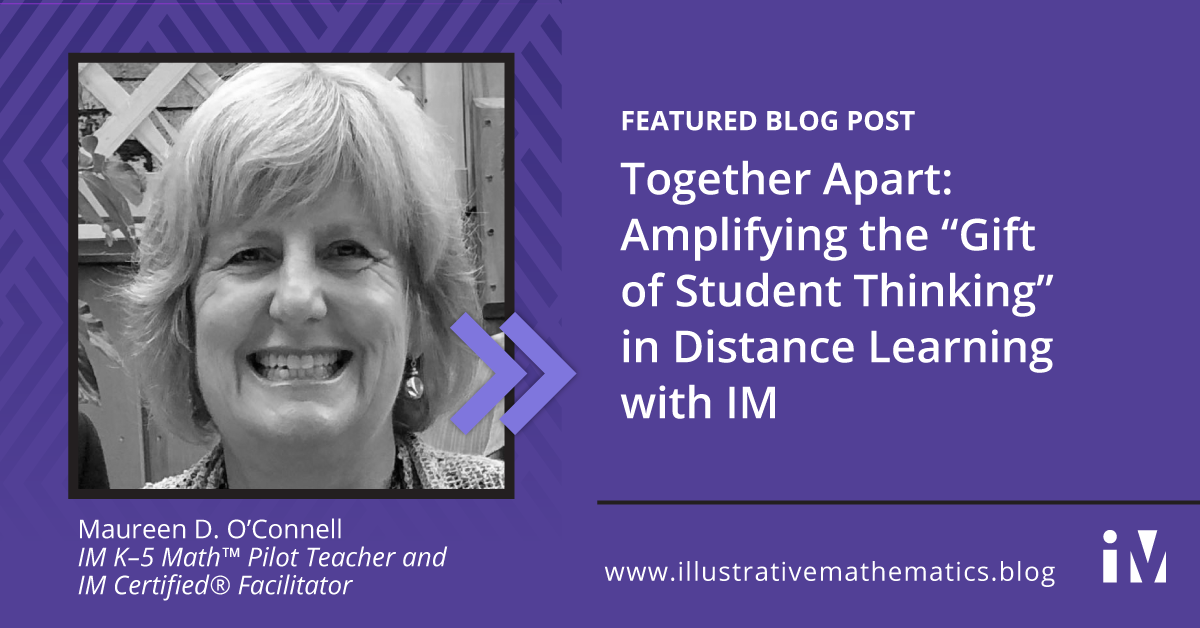
By Maureen D. O’Connell, IM K–5 Math™ Pilot Teacher,IM Certified® Facilitator for IM K–5 Math “The more intensely interested a teacher is in a student’s thinking, the more interested the student becomes in his or her own thinking.” —Eleanor Duckworth Whether we teach...
classroom community
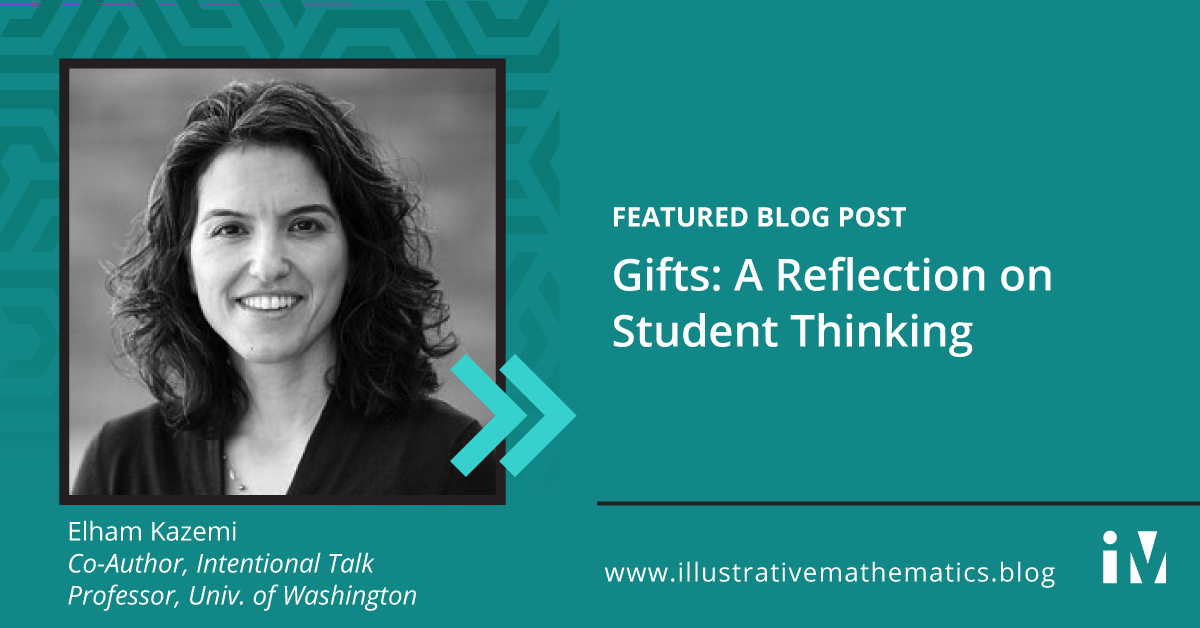
Gifts: A Reflection on Student Thinking
Oct 12, 2021
By Elham Kazemi, Co-Author of Intentional Talk and Professor at University of Washington “Gifts from the earth or from each other establish a particular relationship, an obligation of sorts to give, to receive, and to reciprocate.” Robin Wall Kimmerer, Braiding...
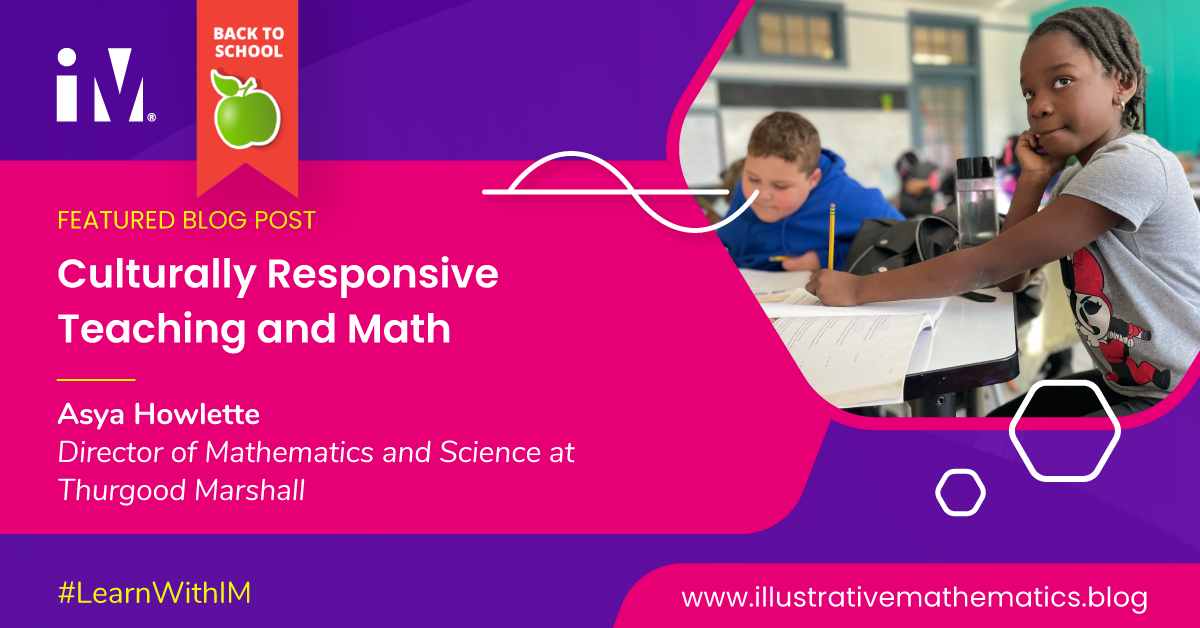
Culturally Responsive Teaching and Math
Jun 30, 2021
By Asya Howlette, Director of Mathematics and Science at Thurgood Marshall Raise your hand if you have been perplexed by professional learning that told you your class needs to be culturally responsive, but left you completely unsure about what that means in a math...
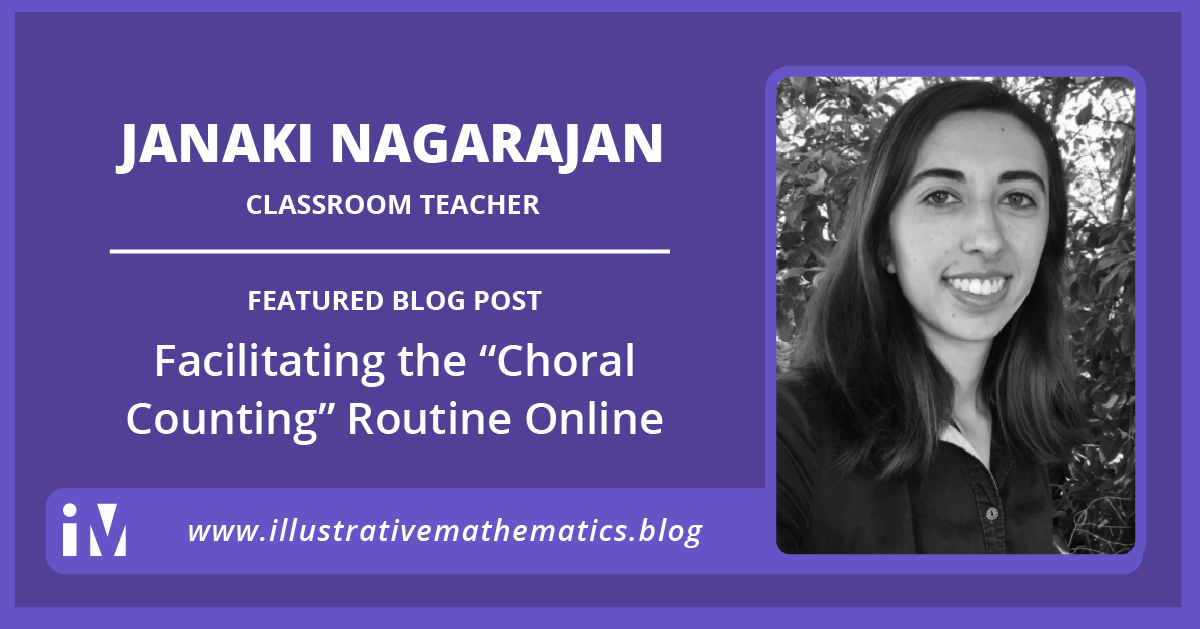
Facilitating the “Choral Counting” Routine Online
Aug 25, 2020
by Janaki Nagarajan How can we best do mathematics together in an online environment? When school suddenly shifted online last spring, I found myself overwhelmed by the learning curve for new technologies—for both myself and my students. I knew that I wanted to...
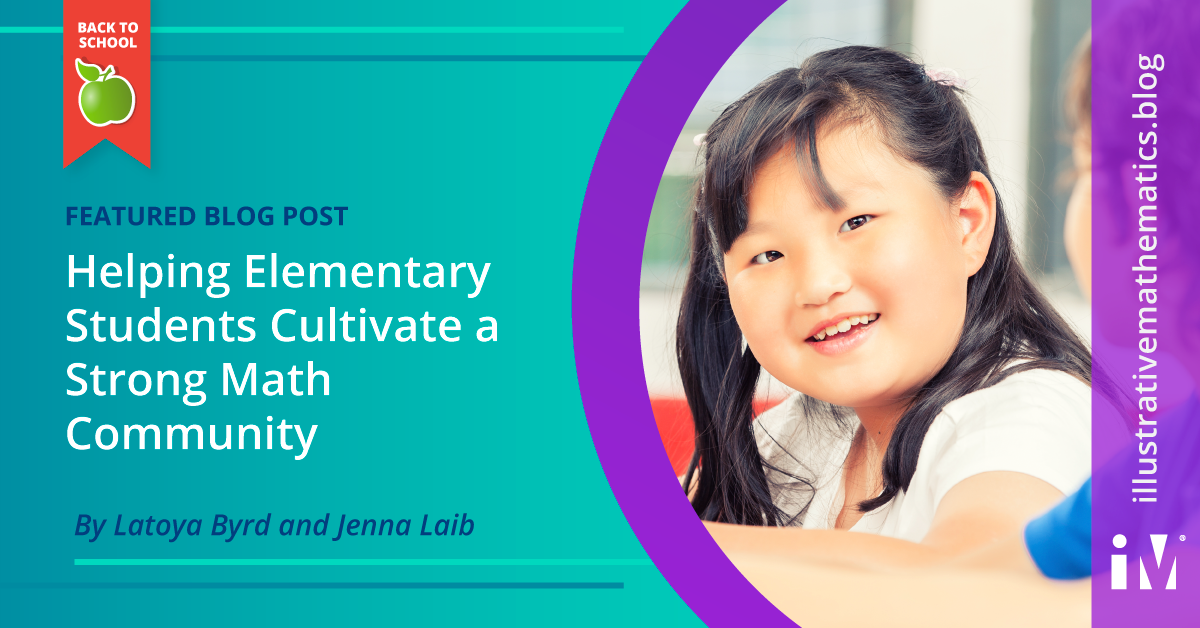
Helping Elementary Students Cultivate a Strong Math Community
Aug 18, 2020
by LaToya Byrd and Jenna Laib School looks different this year. It’s easy to focus on the changes that will need to be made—the new practices, the new routines, the new technologies—but we must first focus on our central beliefs about teaching and learning, and use...
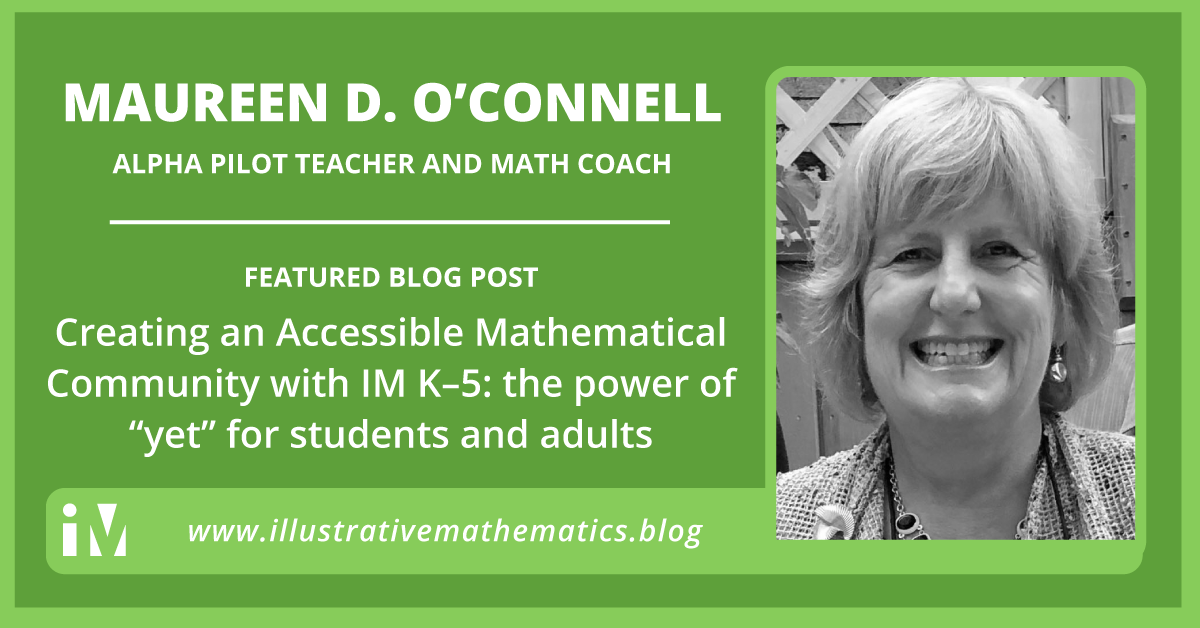
Creating an Accessible Mathematical Community with IM K–5: the power of “yet” for students and adults
Oct 22, 2019
Does the perfect elementary math curriculum exist? Armed with a growth mindset and the Alpha IM K–5 curriculum, teachers in Ipswich Public Schools push their thinking to reach all mathematicians. By Maureen D. O’Connell I preach growth mindset daily. When my students...
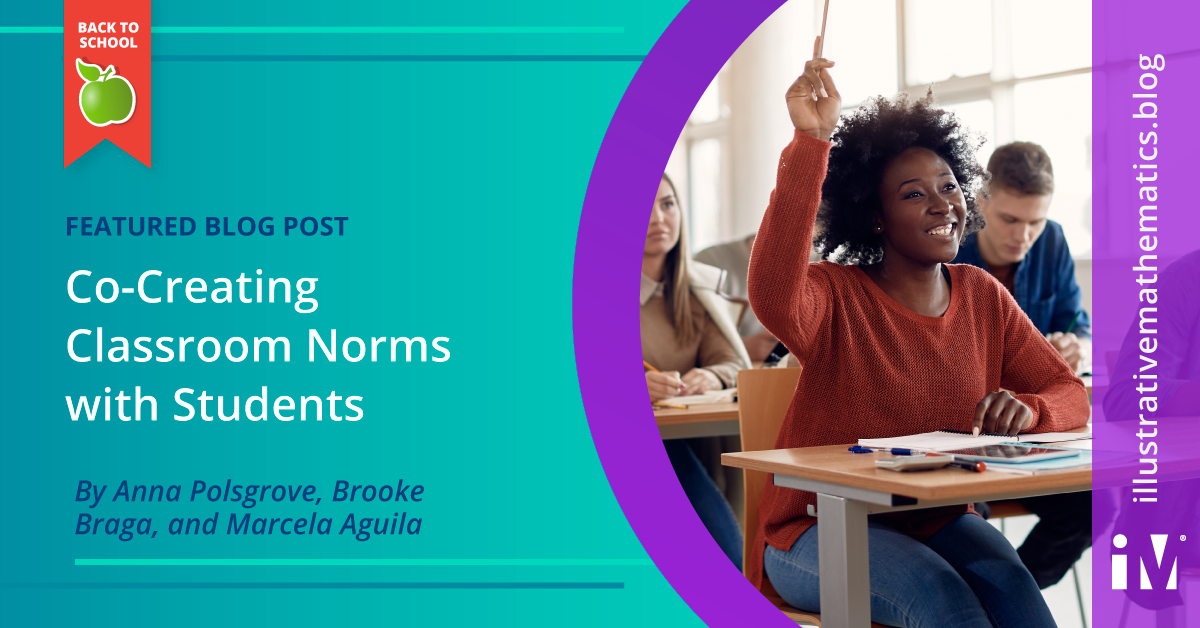
Co-Creating Classroom Norms with Students
Aug 2, 2019
Establishing norms is critical to creating an environment where all students see themselves as knowers and doers of mathematics. Reflecting on the Illustrative Mathematics mission statement, Creating a world where learners know, use, and enjoy mathematics, how can we...
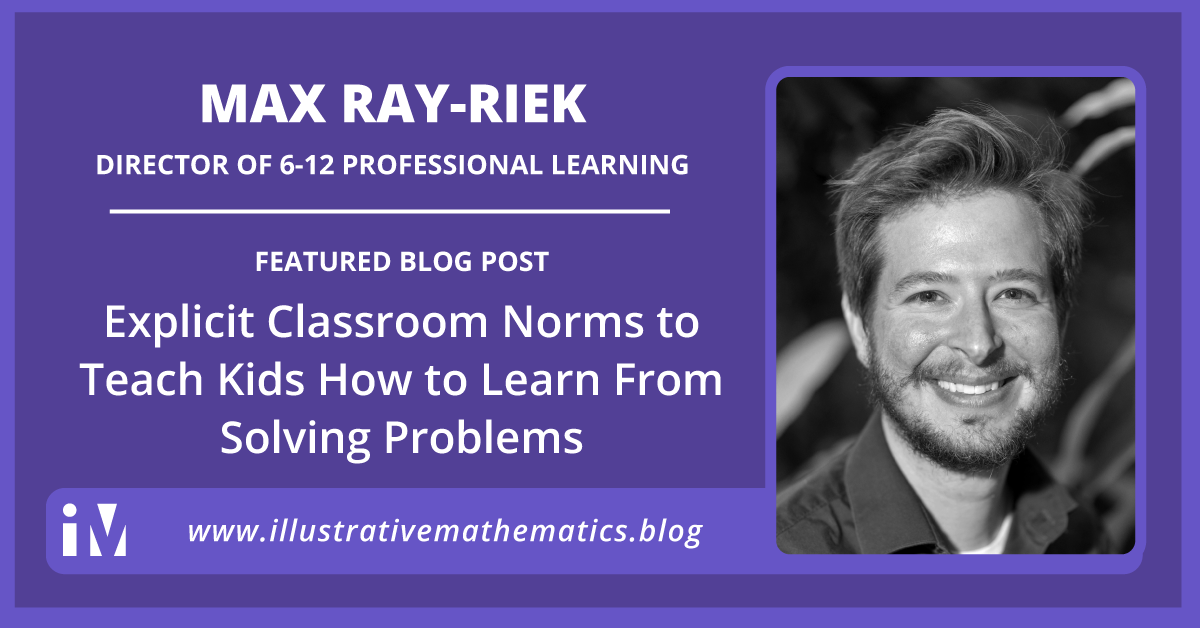
Explicit Classroom Norms to Teach Kids How to Learn From Solving Problems
Jul 29, 2019
This blog post is the fourth in a series of four blog posts exploring the student experience of problem-based learning. The first three posts are available here: (1) “How Do Students Perceive Problem-Based Learning?” (2) “Inviting Students to the Mathematics” (3)...
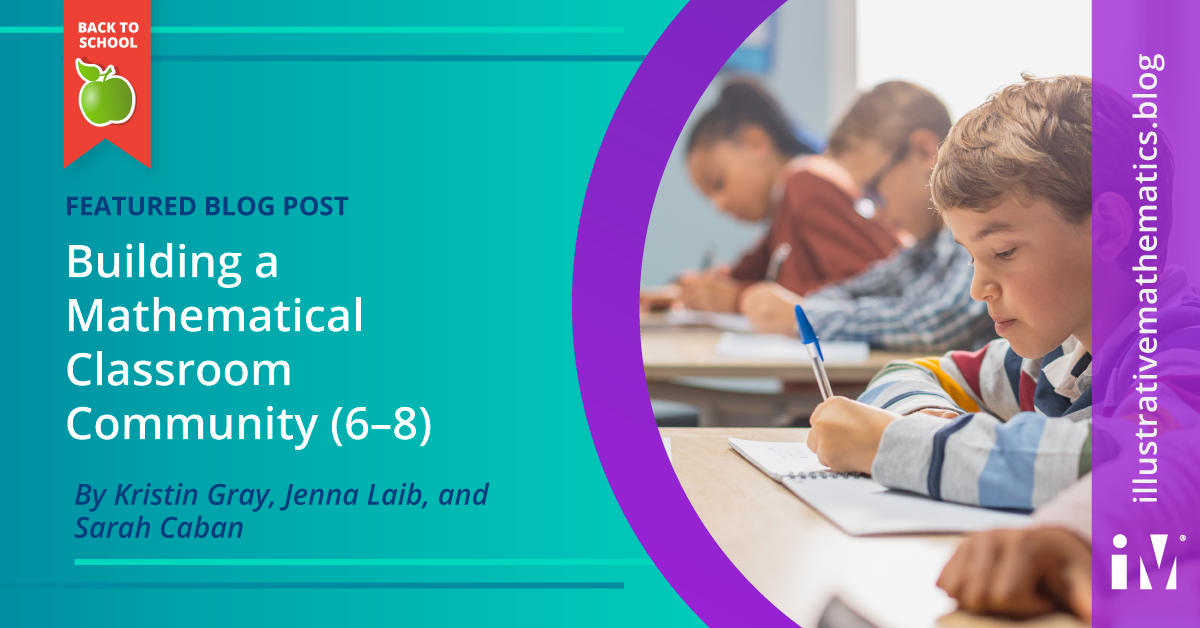
Building a Mathematical Classroom Community
Jul 23, 2018
Classroom environments that foster a sense of community that allows students to express their mathematical ideas—together with norms that expect students to communicate their mathematical thinking to their peers and teacher, both orally and in writing, using the...
to the IM Blog and Newsletter
RECENT POSTS
- What LEGO Taught Us About Play-Based Learning in Transitional Kindergarten Mar 18, 2026
- Staying Curious in Transitional Kindergarten: What Inquiry Play Reveals About How Students Think Mar 11, 2026
- Fluency Development Within and Across the Grades in IM® K–5 Math Part 4: Multiplication and Division Mar 10, 2026
- Fluency Development Within and Across the Grades in IM® K–5 Math Part 3: Multiplication and Division Mar 9, 2026
- Fluency Development Within and Across the Grades in IM® K-5 Math Part 2: Addition and Subtraction Mar 5, 2026
Categories
- 6–8 Math (143)
- 9–12 Math (114)
- Assessment (1)
- Back to School (7)
- Classroom Community (5)
- Classroom Discourse (6)
- Coaches Corner (10)
- Computational Fluency (2)
- Equity (5)
- Implementation (6)
- In the Classroom (9)
- Instructional Routines (5)
- K–5 Math (152)
- Lesson Planning (3)
- Math Content (3)
- Math Language Routines (3)
- Partners (5)
- Problem-Based Learning (5)
- Professional Learning (94)
- Recent Blog Posts (12)
- Research Studies (1)
- Supports for English Language Learners (1)
- Supports for Students with Disabilities (6)
- TK/PK Math (12)
- Uncategorized (2)
- Unfinished Learning (1)