
by Lindy Olejniczak, PK–6 Content Specialist
In this series of blog posts—The Anatomy of an IM® Math Lesson—we’re taking a closer look at each part of an IM® Math lesson and how it contributes to meaningful student learning. After exploring the launch and warm-up in our first two posts, we’re turning our attention to centers and the important role they play in helping students build fluency, deepen mathematical understanding, and engage in joyful mathematical play.
If you’re new to IM Math or looking for additional implementation support as you read, our free on-demand training modules provide classroom videos, grade-specific examples, and practical guidance that complement the ideas explored throughout this series.
Two first-grade students are playing Capture Squares. As one student gets ready to roll the dice, the teacher asks, “What do you hope to roll next?”
“I hope I roll 2 fives because I want to close this 10 square,” he answers.
“That’s great!” the teacher says. “Is there anything else you could roll?”
The student thinks for a moment. “I could roll a 4 and a 6 because that also makes 10!”
At first glance, this may look like students simply playing a game. But listen closely and you’ll hear mathematical reasoning, strategic thinking, and opportunities for formative assessment happening all at once.
That’s exactly what centers in IM K–5 Math are designed to support.
Learning Through Play
IM K–5 Math centers provide students with meaningful opportunities to revisit and extend important mathematical ideas through purposeful games and activities. Rather than worksheets or drills, centers create authentic reasons for students to use the math they’re learning in a low-stakes, engaging environment.
But centers aren’t just beneficial for students. While students are immersed in mathematical play, teachers gain something equally valuable: a window into student thinking. As the vignette above illustrates, teachers can make observations and ask questions that provide insight into what students already know or where they may need additional support.
Centers Grow with Students
Like every component of an IM Math lesson, centers are intentionally connected to the mathematical ideas students are developing throughout the curriculum. They might reinforce concepts from the day’s lesson, revisit prior learning, or develop and support procedural fluency.
IM Math Lesson Structure
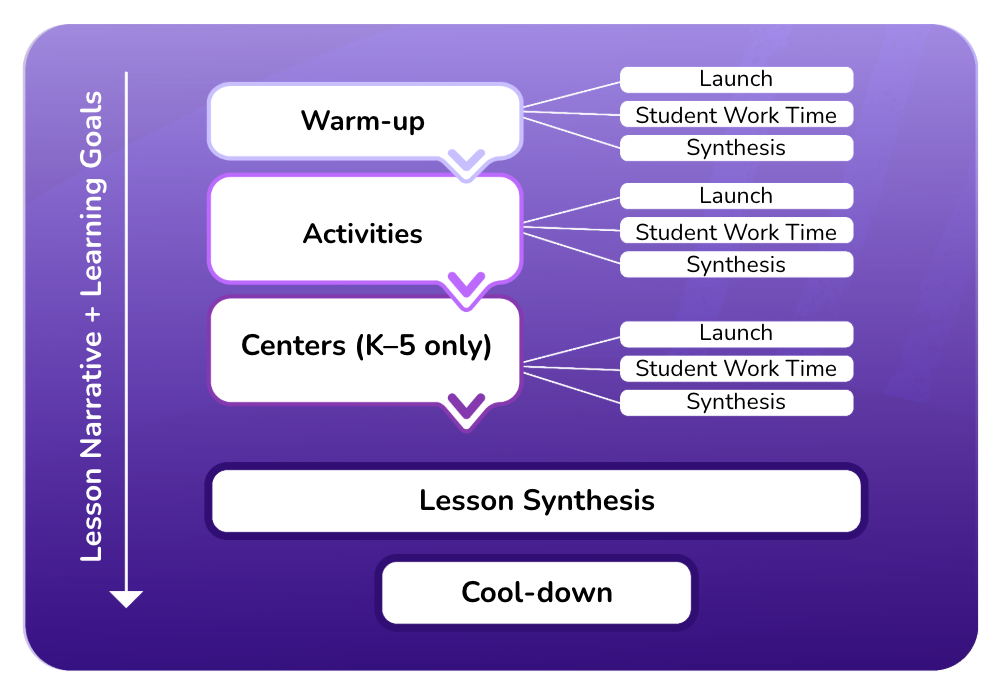
Each center is organized into stages that span multiple grade levels. For example, a first-grade student might play Capture Squares Stage 1, while a third-grade student plays Capture Squares Stage 5.
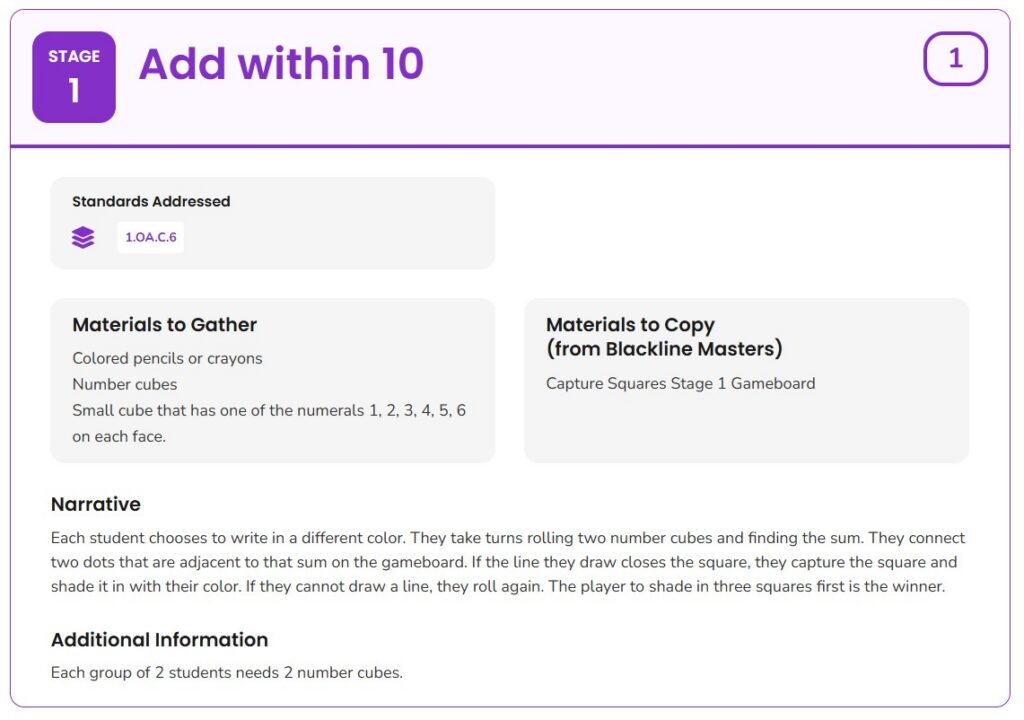 Capture Squares Stage 1
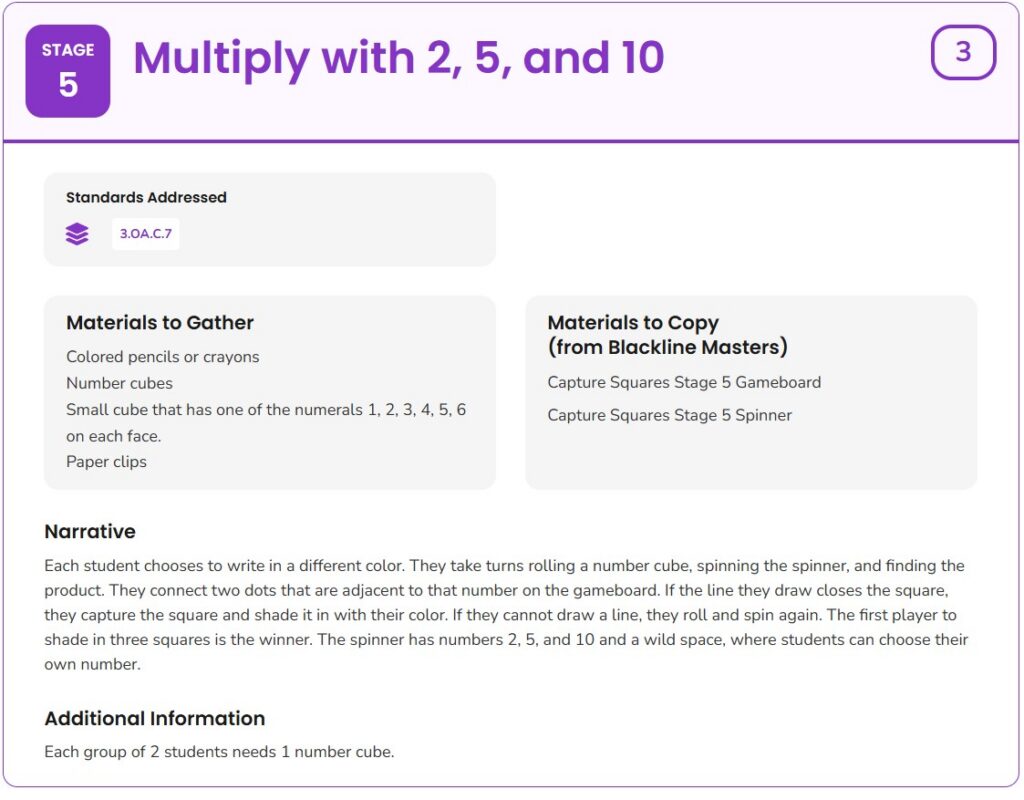 Capture Squares Stage 5
Although the game is familiar, each stage is tailored to the mathematical goals of the grade level, allowing teachers to meet students where they are while continuing to build toward deeper understanding.
In kindergarten through second grade, centers are embedded within lessons as an activity, centers choice time, or a center day.
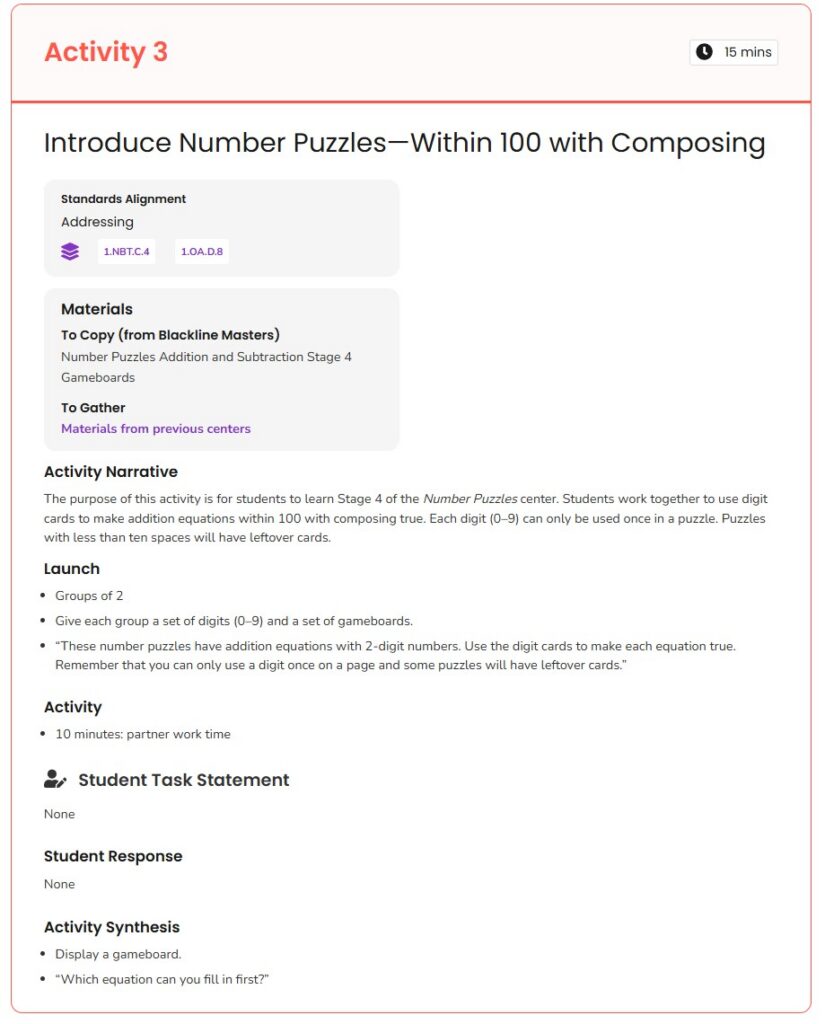 Grade 1, Unit 5, Lesson 10
In grades 3–5, centers become an additional lesson component, with suggested centers included in each day’s lesson preparation.
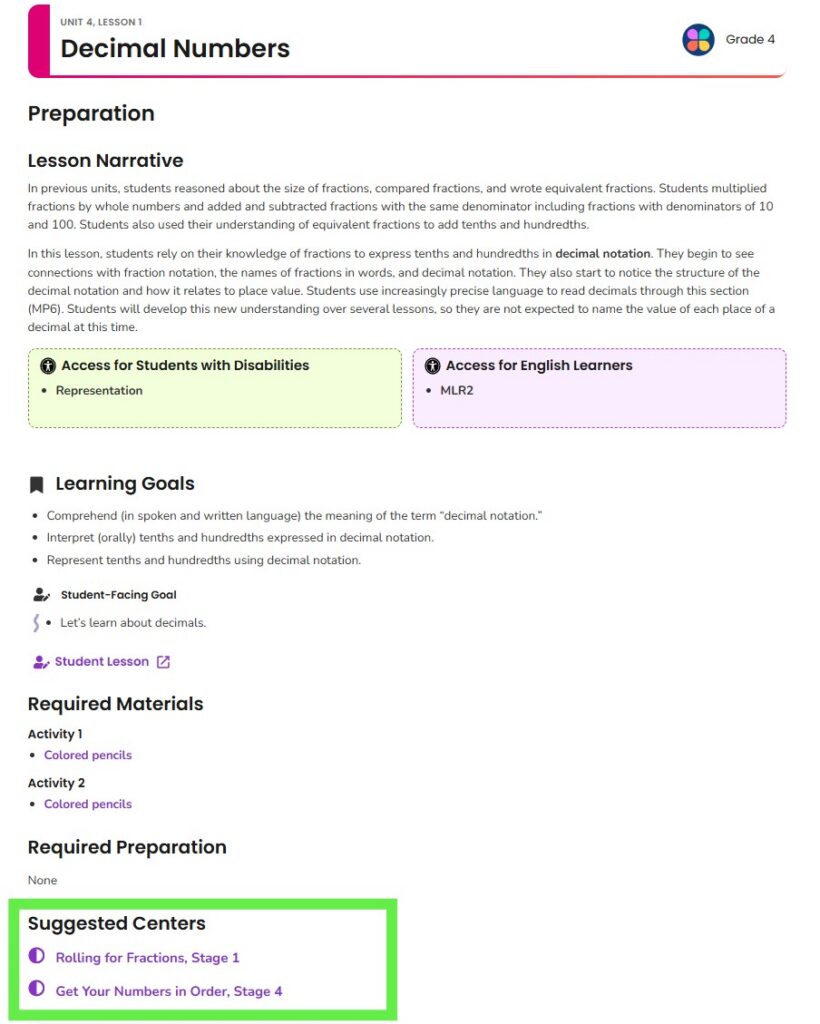 Grade 4, Unit 4, Lesson 1
Making the Most Out of Center Time
Prepping centers ahead of time helps students spend more time doing mathematics and less time waiting for materials.
The centers section of AccessIM includes printable blackline masters and guidance for each center. Many teachers choose to laminate materials, use dry erase pocket sleeves, or organize reusable center kits so students can grab and go when center time arrives.
Teachers looking for ready-to-use center kits and classroom manipulatives can also explore IM Certified® partner Hand2mind, which offers materials designed to support IM Math implementation. Establishing routines and community norms early in the year also helps center time run smoothly.
Just as important as preparing the materials is preparing your questions. Centers are a prime time to gauge student understanding. Use student play time as an opportunity to observe and ask questions. Consider:
- What standards and skills might arise during game play?
- What would it look like for students to demonstrate those skills?
- What misconceptions might surface?
- What questions could encourage students to explain or extend their thinking?
As the opening vignette demonstrates, asking a question as simple as “What do you hope to roll next? Why?” prompts students to think about all the possible scenarios and explain their reasoning. Those conversations provide valuable insight into students’ mathematical thinking while helping teachers make informed instructional decisions.
Conclusion
As Fred Rogers once said, “Play is often talked about as if it were a relief from serious learning. But for children, play is serious learning.”
Think of the students playing Capture Squares. On the surface, they’re rolling dice and filling in a game board. But underneath, they’re composing numbers, considering multiple strategies, making predictions, and explaining their reasoning. Their teacher isn’t simply supervising play. She’s listening, observing, and learning about her students as mathematicians.
That’s the power of IM K–5 Math centers. They create joyful, playful opportunities for students to engage deeply with math while giving teachers meaningful insight into student thinking. Like every other component of an IM Math lesson, centers are intentionally designed to support both learning and teaching—helping students build confidence, develop fluency, and experience mathematics as something worth exploring.
Are You Ready for More?
Connect with the Illustrative Mathematics team and ask about “Teach and Learn.” Schedule a call or email us at [email protected].
Looking for additional implementation support? Our free, self-paced on-demand training modules help teachers prepare lessons, understand instructional routines, build mathematical community, and confidently implement IM Math.
- classroom videos
- grade-specific examples
- companion guides
- available for every K–12 grade band
 Lindy Olejniczak
PK–6 Content Specialist
Lindy Olejniczak is a PK–6 Content Specialist with over a decade of experience as an elementary classroom teacher and mathematics coach. She is passionate about helping all students find joy in mathematics and see themselves as capable, confident learners. As part of the Illustrative Mathematics PK–6 writing team, Lindy brings her classroom experience, coaching perspective, and commitment to meaningful math learning to life through engaging, student-centered curriculum materials.